An Atlanta Dermatology Provider Answers Your Eczema Questions
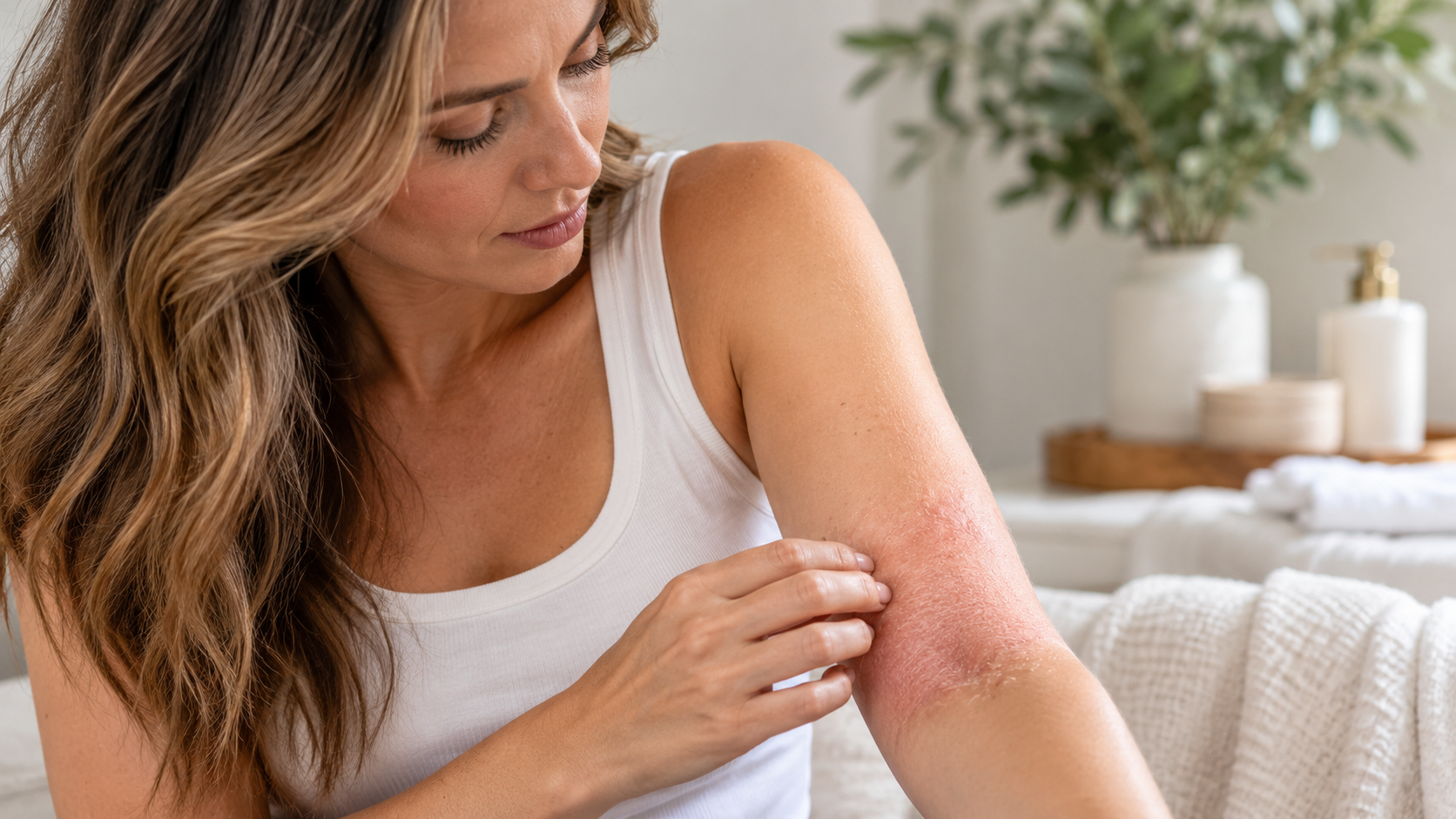
Eczema flares often begin with a dry, compromised skin barrier, which can make the skin more vulnerable to moisture loss and irritation.
That means managing eczema isn’t only about treating redness and itching once they appear. What you do between flares matters, too.
“With eczema, we don’t just want to treat the flare. We want to support the skin barrier between flares so patients can hopefully have longer stretches of clear, comfortable skin.” — Laura Beacham, PA-C
We asked Laura Beacham, PA-C, at Georgia Skin Specialists in Atlanta to answer some of the most common eczema questions she hears from patients, including whether eczema is related to food or allergies, how often you should shower, and what you can do to help prevent future flares.
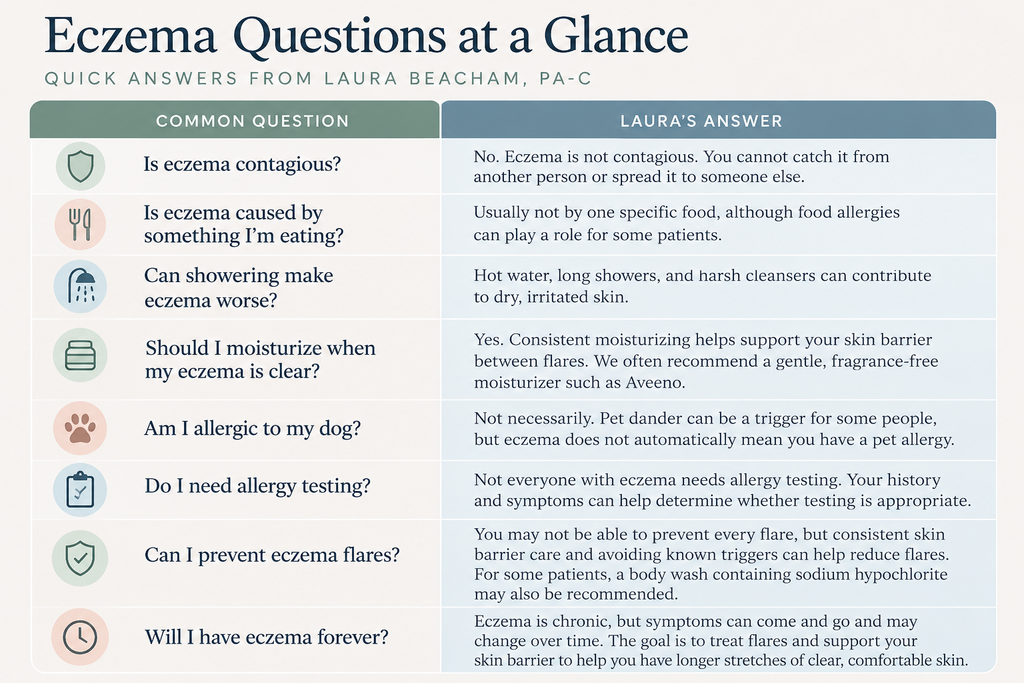
Eczema at a Glance
What actually happens before an eczema flare?
Laura: One of the biggest things we look at with eczema is the skin barrier.
Before you see the redness, itching, or irritation of a flare, your skin may already be dry and the barrier may not be functioning as well as it should. That makes it easier for moisture to escape and for irritants to affect the skin.
That’s why I don’t only want to know what you’re doing when your eczema is flaring. I also want to know what you’re doing when your skin is clear.
Taking care of your skin barrier consistently is an important part of managing eczema and working toward longer stretches between flares.
Is there anything I can do to prevent eczema flares?
Laura: You can’t necessarily prevent every eczema flare, but there are things you can do every day to better support your skin barrier.
One of the simplest is moisturizing consistently, even when your eczema isn’t bothering you. I typically recommend a good, fragrance-free body moisturizer, such as Aveeno, especially after bathing.
For some patients, I may also recommend a body wash containing sodium hypochlorite as part of their routine. Whether that’s appropriate depends on the individual patient and what we’re seeing with their skin.
The goal is to be proactive instead of waiting until your skin is itchy and inflamed to start taking care of it.
Am I showering too much?
Laura: Usually, I’m less concerned about how often you’re showering and more concerned about how you’re showering.
Very hot water, long showers, harsh soaps, and heavily fragranced products can all contribute to dry, irritated skin.
I generally recommend keeping the water lukewarm, avoiding unnecessarily long showers, using a gentle cleanser, and applying a fragrance-free moisturizer shortly after getting out.
Is my eczema something I’m eating?
Laura: This is one of the most common questions I hear.
For most people, eczema isn’t as simple as identifying one food and removing it from your diet. Food allergies can play a role for some patients, but I don’t recommend automatically eliminating foods just because you have eczema.
If you consistently notice that your symptoms worsen after eating something specific, bring that up with your healthcare provider. That pattern can help us determine whether further evaluation is appropriate.
Am I allergic to my dog?
Laura: Not necessarily.
Having eczema doesn’t automatically mean you’re allergic to your dog. Pet dander and other environmental allergens can contribute to symptoms for some people, but we want to look at your individual history before assuming your pet is the problem.
If you notice that your eczema consistently worsens after certain exposures, let us know. Those patterns can help determine whether additional evaluation makes sense.
Do I need allergy testing for eczema?
Laura: Not everyone with eczema needs allergy testing.
If your symptoms or medical history make us suspicious of a particular food, environmental allergen, or something coming into contact with your skin, testing may be helpful.
But we don’t need to automatically test every patient with eczema for every possible allergy. Your symptoms, history, and patterns can help determine whether testing is appropriate.
Is eczema contagious?
Laura: No. Eczema is not contagious.
You cannot catch eczema from someone else, and you cannot spread it to another person through skin-to-skin contact.
Will I have eczema forever?
Laura: Eczema is considered a chronic skin condition, but that doesn’t mean your skin will always be flaring.
Symptoms can come and go, and they may change throughout your life.
When we’re treating eczema, our goal isn’t only to calm down what’s happening today. We also want to understand potential triggers, support the skin barrier, and have a plan for what to do if symptoms start to return.
What’s the biggest thing you wish patients with eczema knew?
Laura: Don’t wait until your skin is miserable to start thinking about your eczema.
The dry skin that can come before the redness and itching matters. Your everyday routine matters. What you’re cleansing with, how you’re showering, and whether you’re moisturizing consistently all play a role in supporting your skin barrier.
Eczema care isn’t only about treating your next flare. It’s about taking care of your skin between flares, too.
Looking for Eczema Treatment in Atlanta?
If you’re dealing with recurring eczema, persistent itching, dry skin, or frequent flares, a dermatology evaluation can help you better understand what’s happening with your skin and create a treatment plan based on your individual needs.
At Georgia Skin Specialists, our dermatology team can assess and treat eczema and other common skin conditions.
Schedule an appointment at Georgia Skin Specialists to talk with our team about your eczema and create a personalized treatment and skin barrier care plan.